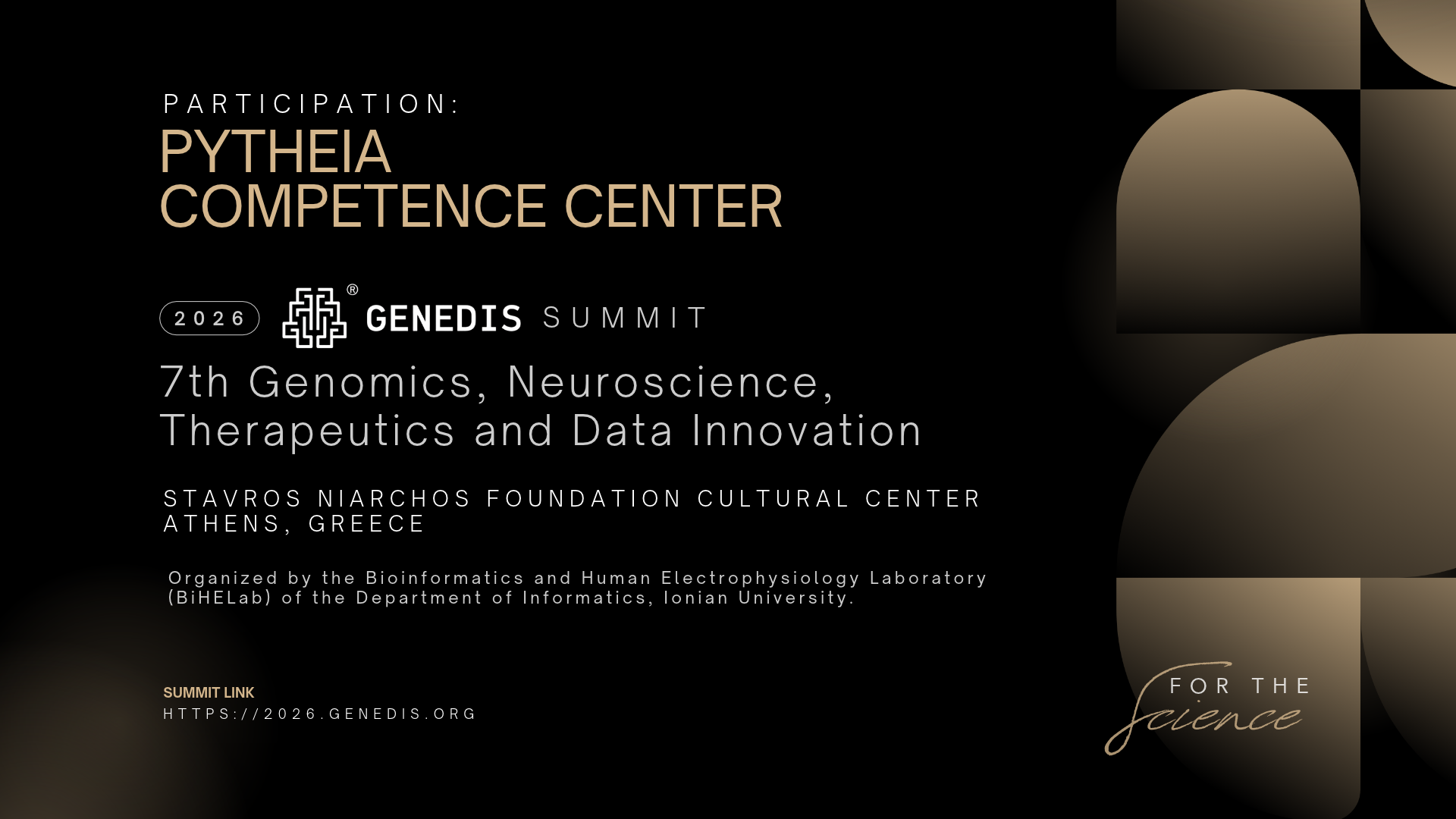
PYTHEIA Competence Center joins the international GeNeDis 2026 Summit, presenting emerging research approaches to human cognitive development through Artificial Intelligence and the application of neuroscience to architectural design.
Larissa, Greece | November 16, 2026
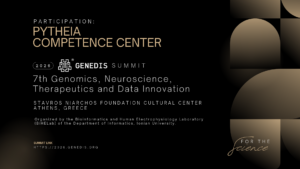
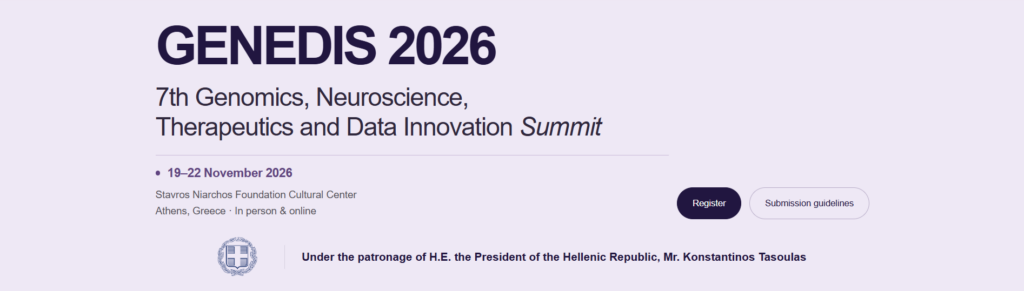
PYTHEIA Competence Center will participate in GeNeDis 2026 — the 7th Genomics, Neuroscience, Therapeutics and Data Innovation Summit, taking place on November 19–22, 2026, in Athens, Greece, with the Stavros Niarchos Foundation Cultural Center serving as the main venue.
Held under the patronage of H.E. the President of the Hellenic Republic, Mr. Konstantinos Tasoulas, the Summit is an international interdisciplinary gathering bringing together genomics, neuroscience, therapeutic approaches, Artificial Intelligence and data-driven innovation.
PYTHEIA will contribute to two scientific sessions on November 21 and 22, represented by Sotiris A. Anagnostis, Innovation Manager & Director of PYTHEIA Competence Center.
The presentations connect two complementary research areas: AI-supported neuroeducation and neuroarchitecture, highlighting the importance of human knowledge, scientific reasoning and professional judgment in the development and use of advanced technologies.
Home
 GeNeDis 2026 Summit
November 21 | Can Artificial Intelligence Make Us More Capable?
During the Behavioural Neuroscience & Neuroeducation session, PYTHEIA will present a research approach exploring the relationship between Artificial Intelligence, learning and the development of human cognitive capabilities.
AI can increase productivity and support complex tasks. However, successfully completing a task does not necessarily mean that a person has acquired new knowledge or skills.
The central question is whether collaboration with AI merely improves immediate performance or also contributes to stronger understanding, critical thinking and decision-making capabilities.
PACOVE-AI and Cognitive Opportunity Gain (COG)
To investigate this question, PYTHEIA is developing PACOVE-AI, a proposed research framework for evaluating human–AI collaboration.
The framework examines five interconnected dimensions: Purpose, Agency, Cognitive Opportunities, Verification and Effects.
Complementing this approach, Cognitive Opportunity Gain (COG) investigates how access to new cognitive opportunities (Access) may progress into their practical application (Realisation) and the potential internalisation of knowledge and skills (Internalisation).
The proposed learning process is summarized through four interconnected stages:
November 22 | SafePath.ai: Artificial Intelligence and Neuroarchitecture
PERCEIVE → QUESTION → VERIFY → NEUROEDUCATE
The individual observes, critically questions, verifies evidence and uses the experience as an opportunity for learning and cognitive development.
PACOVE-AI and COG are currently under development and require further scientific evaluation and validation.
November 22 | SafePath.ai: Artificial Intelligence and Neuroarchitecture
During the AI-Powered Agents for Dementia session, held as part of the parallel scientific activities at THALPOS Piraeus, PYTHEIA will present SafePath.ai, under the presentation title:
“AI-Powered Application for Designing Neuroscience-Friendly Architecture”
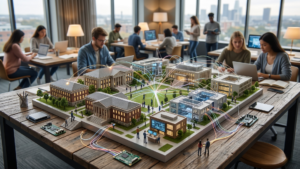
SafePath.ai is an emerging platform combining Artificial Intelligence, neuroscientific principles and architectural analysis to support the design of environments that better respond to human cognitive, behavioral and functional needs.
Its methodology is structured around three key processes:
- Spatial Analysis: The use of photographs, architectural floor plans and available environmental data to assess spatial characteristics.
- Scientific Evidence: Connecting findings with scientific literature, neuroscientific principles and technical criteria.
- Human Verification: Reviewing proposed interventions through architects, engineers and scientific experts.
The application follows the Human-in-the-Loop (HITL) principle, ensuring that professionals retain responsibility for scientific assessment and final decisions.
Potential applications include healthcare facilities, long-term care environments and spaces supporting people with cognitive difficulties. The effectiveness of proposed interventions requires further scientific verification.
PYTHEIA: Connecting Scientific Research with Technological Innovation
Based in Larissa, Greece, PYTHEIA Competence Center operates as a public–private partnership in the healthcare sector. Its shareholders include the University of Thessaly, Ionian University and the University of the Aegean, alongside private-sector partners.
Participation in GeNeDis 2026 highlights PYTHEIA’s research direction toward developing AI applications that support both evidence-informed decision-making and human cognitive development.
The real value of Artificial Intelligence lies not only in helping us make better decisions today, but also in creating the conditions that may enable us to become better decision-makers tomorrow.
GeNeDis 2026: https://2026.genedis.org/
Summit dates: November 19–22, 2026 | Athens, Greece
PYTHEIA participation: November 21–22, 2026
Speaker: Sotiris A. Anagnostis — Innovation Manager & Director, PYTHEIA Competence Center
Website: https://pytheia.gr/